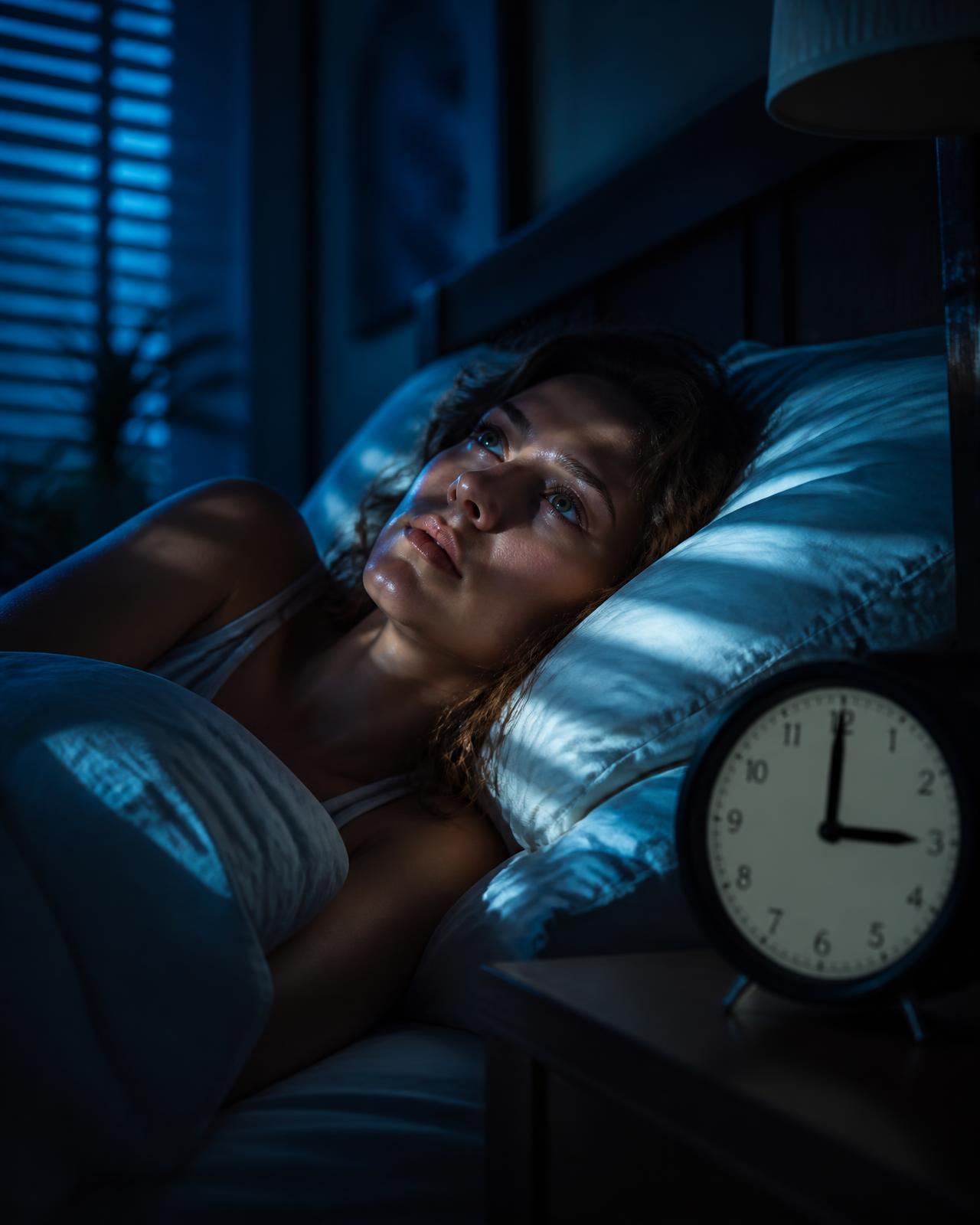
You fall asleep easily. And still, at some point between three and four in the morning, your eyes open — and stay open. Over three months, our editorial team dug into the research, the reader mail, and the long menu of remedies most adults have already tried. This is what we found.
Reviewed by the Neviora editorial desk against our editorial standards. This article contains affiliate links — see our disclosure. It is not medical advice.
Three in the morning. For millions of otherwise healthy adults, this is the hour the night quietly falls apart.
How we reported this piece
The method behind the investigation.
Before writing a word, our editorial desk spent roughly twelve weeks assembling the picture below. No source was paid, and no claim in this article rests on a single study.
Peer-reviewed literature
We read published sleep research from institutions including Northumbria University, Louisiana State University, and the National Institutes of Health, focusing on tart cherry, melatonin, magnesium and L-theanine.
Reader correspondence
We reviewed hundreds of emails and survey responses from readers describing broken sleep — grouping them by age, lifestyle, and what they had already tried.
Sleep-habit patterns
We mapped common evening routines against reported outcomes: caffeine timing, screen use, exercise, meal timing, and use of over-the-counter aids.
Conversations with specialists
We spoke informally with sleep-focused clinicians and formulators to test our interpretation of the evidence and to challenge our own conclusions.
Where a piece of information comes from a product's manufacturer rather than independent research, we say so plainly in the text.
Chapter One
"I sleep — but I never feel rested."
The message arrives, in one form or another, in almost every inbox we've opened this year. A teacher in Ohio. A nurse working nights in Phoenix. A father of two in Brooklyn who swears he goes to bed at ten and wakes up at seven, and still drags himself through the day as if he hadn't slept at all.
What they describe is not insomnia in the classic sense. They fall asleep. They stay in bed. On paper, they get their hours. But somewhere in the middle of the night, sleep goes shallow — and never quite comes back.
Sleep researchers have a plain name for it: fragmented sleep. And it may be the most under-diagnosed health issue in the country.
"It's like my body forgets, halfway through the night, that it's supposed to be sleeping." — reader, 43, from Denver.
Chapter Two
What actually happens at 3 AM.
A healthy night is not one long tunnel of unconsciousness. It's a rhythm — four to six cycles of light sleep, deep sleep, and REM, each about ninety minutes long. Somewhere around the third cycle, roughly three hours after you drift off, the body naturally rises toward a lighter phase.
For a well-regulated nervous system, this is invisible: you pass through the shallow layer and slip back down. But under modern conditions — chronic stress, late-day screens, caffeine that outlasts the sun, a dip in the body's own melatonin production after 35 — that shallow layer becomes a doorway. And you wake up.
"The issue isn't falling asleep. It's staying there. Millions of adults are losing the last, most restorative third of the night without ever realizing it."
Deep sleep — the phase where tissue repairs, memory consolidates, and cortisol resets for the next day — is concentrated in those later cycles. Lose them, and you don't just feel tired. You feel foggy, irritable, hungrier than usual, and inexplicably older than the calendar says.
Chapter Three · The Alternatives
What we examined before considering any product.
The reader mail made one thing very clear: almost no one lands here without trying something first. So we built a short list of the eight approaches that came up most, and looked at what the research — and our readers — actually reported about each.
01
Sleep hygiene protocols
Helpful as a foundation, but rarely enough on its own for readers already keeping a consistent schedule.
02
Cutting caffeine after noon
Improved sleep onset for some — did little for those whose problem was staying asleep past 3 AM.
03
Screen curfews and blue-light filters
A useful nudge to natural melatonin, but readers reported the effect faded within weeks.
04
Meditation and breathing apps
Real benefits for pre-sleep anxiety; less impact on the middle-of-the-night awakenings themselves.
05
Standalone magnesium
Popular and inexpensive. Many readers felt calmer, though few described it as decisive on its own.
06
High-dose melatonin
Often shortens time to fall asleep, but overshoots the body's own rhythm — associated with grogginess.
07
Chamomile and valerian teas
Comforting bedtime rituals. Most readers described the effect as gentle rather than sustained.
08
Tart cherry juice
The most compelling of the food-based options — but few readers were willing to drink it nightly.
None of these approaches were wrong. Several are genuinely useful. But taken alone, none consistently addressed the specific problem readers kept describing: falling asleep without difficulty, then losing the second half of the night.
What kept surfacing in the research was something quieter — a combination of a food-based melatonin source with the minerals and amino acids the nervous system uses to hold sleep in place. Not a sedative. A signal.
Chapter Four
The overlooked cherry, and a 30-second ritual.
In the mid-2000s, a small group of researchers at Northumbria University noticed something curious. Adults who drank concentrated tart cherry juice in the evening slept measurably longer — an average of 39 extra minutes a night — and spent more time in the deeper sleep stages.
The reason turned out to be biology, not folklore. The Montmorency tart cherry is one of the few natural foods that contains meaningful amounts of dietary melatonin, along with anthocyanins that help the body use it. In other words: not a sedative, but a signal — a gentle reminder to a confused nervous system that the sun has gone down.
The trouble, of course, is that no one wants to drink a glass of concentrated tart juice at 10 PM. And so, for years, the finding sat mostly in academic journals.
Chapter Five · The Building Blocks
Four ingredients researchers keep returning to.
Across the studies and specialist conversations, the same short list of compounds kept appearing — each addressing a different piece of the fragmented-sleep puzzle. Here is what they are, where they come from, and why researchers pay attention.
01
Red Tart Cherry Extract
What it is
A concentrate of the Montmorency cherry, a small, deeply pigmented sour cherry grown mainly in Michigan and the Great Lakes region.
Why it's studied
One of the few foods that naturally contains dietary melatonin, alongside anthocyanins studied for their role in oxidative balance.
Why it appears in the formula
Chosen as the centerpiece after a small Northumbria University trial reported longer total sleep time in adults who consumed it in the evening.
02
Magnesium Glycinate
What it is
Magnesium bound to the amino acid glycine — the gentlest, most bioavailable form of the mineral.
Why it's studied
Magnesium is a common shortfall in the modern American diet, and researchers have long examined its relationship with muscle relaxation and nervous-system calm.
Why it appears in the formula
Included to support the body's transition out of a stress-dominant state, without the digestive side effects of harsher magnesium forms.
03
Melatonin (low, physiological dose)
What it is
A hormone the pineal gland produces naturally as evening light fades.
Why it's studied
Endogenous production declines noticeably after the mid-30s — a shift researchers frequently link to lighter, more fragmented nights.
Why it appears in the formula
Included at a small, signaling dose rather than the high milligram doses common in drugstore products, to nudge rather than override the body's rhythm.
04
L-Theanine
What it is
An amino acid found almost exclusively in green tea leaves.
Why it's studied
Studied for its ability to encourage calm alertness — a state of quiet focus that appears to soften into sleep without sedating the drinker.
Why it appears in the formula
Selected to address the racing-mind pattern many readers described in the hour before bed.
Six additional supporting botanicals and amino acids appear in the full nightly formulation described later in this piece.
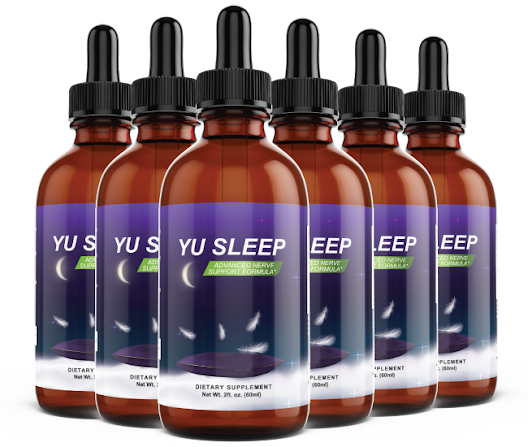
Photograph provided by the manufacturer. The formula we kept encountering, packaged as a single nightly ritual.
Chapter Six
The formula that appeared repeatedly.
Toward the end of our reporting, one product kept surfacing — in reader mail, in specialist conversations, and in the Amazon receipts people were quietly forwarding to us. It is called YU Sleep, and it is, essentially, the ritual described in the previous chapters, delivered as a single nightly supplement.
Its ten-ingredient formula is built around the tart cherry finding, combined with the compounds most sleep clinicians will recognize on sight: magnesium glycinate for the nervous system, L-theanine for the racing mind, a small physiological dose of melatonin — never the high-dose drugstore kind — and a handful of botanicals that support the transition into deeper sleep.
What made it worth mentioning here isn't a single breakthrough ingredient. It's that the assembly matches, almost line for line, the profile our reporting had already pointed us toward — a signal to the body, not a sedative imposed on it.
For readers who have already worked through the standard menu of remedies and are looking for the specific combination described above, the official page includes the full ingredient panel and current pricing.
Nothing in this article is an argument against prescription sleep medicine, which has a real and specific place. But for the readers who wrote to us — otherwise healthy adults who simply lose the second half of the night — the pattern below came up again and again.
High-dose melatonin knocks you out but overshoots the body's natural rhythm — leaving you groggy and, over time, blunting your own production.
Prescription sedatives suppress the very brain activity that deep sleep depends on. You're unconscious. You're not necessarily rested.
Teas and rituals help you unwind at bedtime but do nothing about the 3 AM window itself — the moment the trouble actually begins.
Field Notes
What readers described, after two to four weeks.
These are observations gathered from reader correspondence during our reporting — not clinical outcomes, and not promises. Individual experiences varied.
A softer 3 AM window.
Several readers told us the middle-of-the-night awakening became shorter, then less frequent, over the first few weeks.
Longer stretches of deep sleep.
Wearable-device users often shared screenshots of a measurable shift toward the deeper, restorative portion of the night.
A quieter kind of morning.
Not caffeinated brightness. Readers most often described it as the ordinary feeling of waking up without dragging.
Taken together, these accounts don't prove anything on their own. What they suggested to us was a pattern worth naming — and, for readers who see themselves in it, worth trying with the guarantee described below.
Backed by a 60-day money-back guarantee. If it isn't for you, you send it back — no questions asked.
Reader Questions
Frequently asked.
The five questions that come up most about YU Sleep.
YU SLEEP is a dietary supplement designed to support healthy sleep patterns. Each serving contains a blend of 10 ingredients, including Red Tart Cherry Extract, Magnesium, Melatonin, and L-Theanine, formulated with advanced nano-technology for enhanced absorption.
For readers ready to try it, the official page carries the full ingredient panel, current pricing, and the 60-day guarantee described above.
Your order is protected by a 60-day money-back guarantee. If you are not satisfied for any reason, contact us within 60 days of purchase for a full refund.
The Balance Sheet
What held up, and what didn't.
No formula is right for everyone, and a review that only lists strengths isn't a review. Below is our even-handed reading of the evidence we gathered — including the parts that gave us pause.
What we found convincing
Melatonin is dosed at a physiological, signalling level rather than the high milligram doses common on drugstore shelves.
Tart cherry and L-theanine are among the better-studied food-derived sleep ingredients, with published human trials behind them.
The magnesium form used (glycinate) is the one most often chosen in research settings for tolerability.
The full ingredient list and dose information are published by the manufacturer rather than hidden behind a proprietary blend.
A 60-day refund window lowers the cost of finding out whether it works for you.
What gave us pause
There is no published clinical trial of this specific finished formula — the evidence sits at the individual-ingredient level.
Absorption claims tied to the manufacturer's nano-technology are supplied by the manufacturer and have not been independently verified by us.
Supplements in the United States are not pre-approved by the FDA, so quality assurance rests on the maker.
Reader accounts are self-reported, uncontrolled, and cannot be treated as clinical evidence.
Cost per night is higher than buying magnesium or tart cherry juice separately.
Who it may suit
Adults who fall asleep normally but wake in the small hours.
People already keeping decent sleep hygiene who want a gentler option than a sedative.
Readers who tried single ingredients separately without a consistent result.
Who should avoid it
Anyone pregnant or nursing.
People taking sedatives, blood thinners, blood-pressure or thyroid medication without speaking to their doctor first.
Under-18s, and anyone with a diagnosed sleep disorder such as apnoea, who needs clinical assessment rather than a supplement.
Readers hoping for an immediate, drug-like effect on the first night.
Our position, stated plainly: this is a reasonable, well-constructed version of an approach with genuine research behind it — not a cure, and not a substitute for medical care where a sleep disorder is suspected.
Editor's Letter
A closing thought.
We started this piece looking for a single, satisfying answer to a question our readers kept asking us: why do I wake up in the middle of the night?
We didn't find one. What we found instead was a picture — a modern nervous system running slightly out of sync with its own oldest rhythms, and a small set of natural compounds that, in combination, seem to help it find the way back.
"Better sleep is rarely one dramatic change. It's a small, consistent signal — repeated, night after night, until the body remembers how it used to feel."
Whether that signal, for you, is a walk after dinner, a darker bedroom, thirty grams of pistachios, or the nightly ritual described in this article, the underlying idea is the same. Sleep isn't something you force. It's something you invite back.
— Neviora Editorial
Sources & References
What this article is built on.
We cite the primary literature we consulted so readers can check it themselves. Linking to a study is not an endorsement of any product; none of the research below tested the finished formula discussed in this article.
1.Howatson G. et al. “Effect of tart cherry juice (Prunus cerasus) on melatonin levels and enhanced sleep quality.” European Journal of Nutrition, 2012. PubMed
2.Losso J.N. et al. “Pilot study of the tart cherry juice for the treatment of insomnia and investigation of mechanisms.” American Journal of Therapeutics, 2018. PubMed
3.National Institutes of Health, Office of Dietary Supplements. “Magnesium — Fact Sheet for Health Professionals.” NIH ODS
4.National Institutes of Health, Office of Dietary Supplements. “Melatonin: What You Need To Know.” National Center for Complementary and Integrative Health. NCCIH
5.Williams J.L. et al. “The effects of green tea amino acid L-theanine on mental health and sleep quality: a systematic review.” 2020. PubMed
6.National Heart, Lung, and Blood Institute. “What Are Sleep Deprivation and Deficiency?” NHLBI
Product specifications, dosing and manufacturing claims are supplied by the manufacturer and are labelled as such throughout this article. Read our Editorial Policy and Affiliate Disclosure.
Important Information
This product is not intended to diagnose, treat, cure, or prevent any disease. Results may vary from person to person. Always consult with a qualified healthcare professional before starting any new supplement regimen. The statements made on this page have not been evaluated by the Food and Drug Administration.